After a tree comes down, the stump is usually the last thing on a homeowner's mind. The driveway is clear, the house is safe, and that gray nub of wood in the yard seems harmless. It isn't — and leaving it there almost always costs more in the long run than just grinding it out the same day.
The biggest reason is pests. A decaying stump is a five-star resort for termites, carpenter ants, and wood-boring beetles. Once a colony establishes itself in the stump, it's only a matter of time before scouts find their way to the wood framing of your house, deck, or shed. Pest control for an established infestation routinely runs into the thousands; grinding the stump is a fraction of that.
Stumps also refuse to die quietly. Most hardwoods will throw up new suckers and shoots from the root collar for years, turning what should be lawn into a constant battle with handfuls of unwanted growth. Mowing around it gets old fast, and trying to kill the stump with chemicals is slow, ugly, and rarely fully effective.
There are also real safety issues. Stumps are notorious trip hazards, especially when grass grows up around them and hides the edge. They wreck mower blades. They damage car tires if they sit near the driveway. And the soft, rotted wood at ground level eventually becomes a hole that the kids or the dog can twist an ankle in.
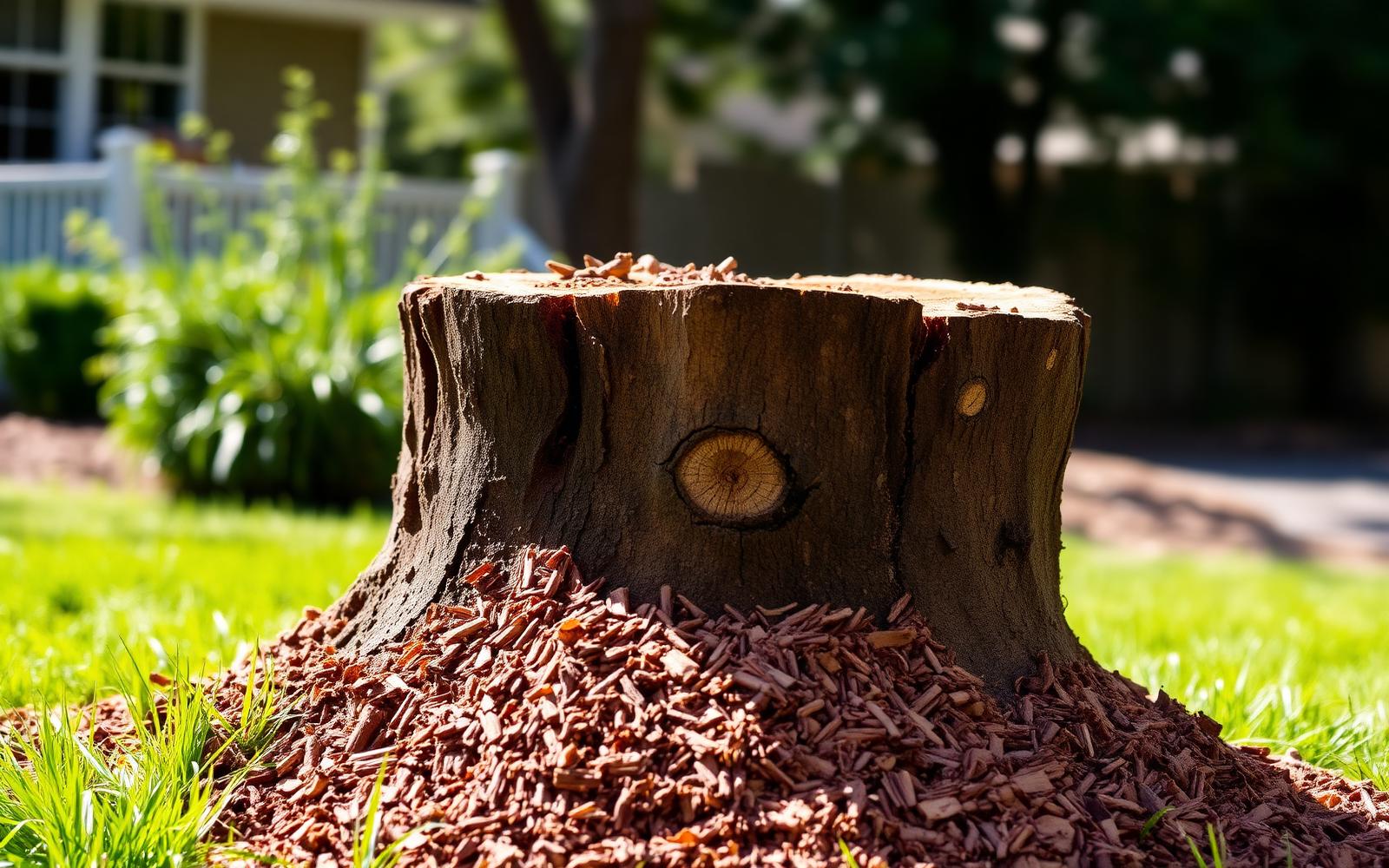
The good news is that grinding is fast and cheap, especially when bundled with the original removal. A typical residential stump comes out 6-8 inches below grade in under an hour. The hole is backfilled with the resulting wood mulch, leveled, and ready for sod or seed.
If you have an old stump left from a previous job — even one that's been there for years — we'll come grind it as a standalone visit. Call (443) 206-3980 for a free quote.